Collapsible or Folding Wagon: Is There Any Difference? (October 2026)
Collapsible and folding wagons usually mean the same thing: a wagon that closes for storage and opens for hauling. To choose a wagon collapsible or folding, compare folded fit, load guidance, wheels and the way you plan to use it.
On this page (8 sections)
- Is a collapsible wagon different from a folding wagon?
- How should you compare folded size for a wagon collapsible or folding?
- Which wagon features matter more than the name?
- Who should buy each type of wagon?
- How do you set up and use a folding wagon?
- What common buying mistakes should you avoid?
- How can you care for a collapsible wagon?
- Collapsible or folding wagon: what should you buy?
Collapsible and folding wagons usually describe the same thing: a wagon that opens for hauling and closes for storage. For a wagon collapsible or folding, the useful differences are the model's size, load guidance, wheels and closing method.
The label alone doesn't tell you how compact a wagon gets or whether it fits your route. Measure your storage spot, estimate the gear you carry, and compare those needs with the wagon's features.
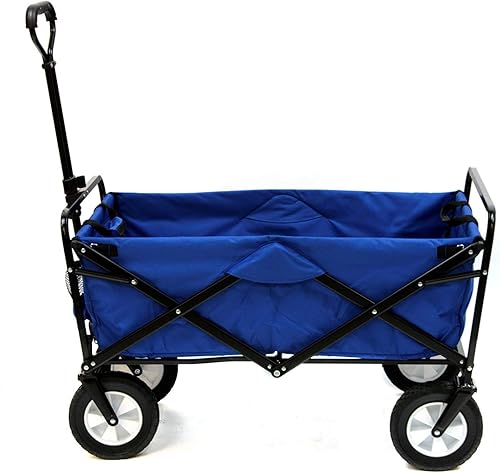 Best for carry case storage
Mac Sports Heavy Duty Steel Frame Folding Wagon

Is a collapsible wagon different from a folding wagon?
Usually, no: “collapsible” and “folding” are overlapping names for wagons that close for storage. The terms don't describe a standard size or one specific folding mechanism.
A wagon may fold inward, compress around its frame or use a drawstring to pull its sides together. Those methods all reduce the wagon's open hauling shape, but the steps and final package can vary.
The words also don't promise that a wagon will be easy for you to fold or small enough for your car. Check its instructions and measurements before buying.
Our plain guide to folding wagon carts explains common sizes, wheels and uses. For a broader definition, see what a collapsible wagon is.
What does “folding” mean on a wagon?
A folding wagon has a frame or body designed to close down between uses. That description doesn't specify how many steps it takes or what shape it makes when folded.
One model may fold with a center pull, while another uses an internal drawstring. Follow the instructions for the exact wagon, and check whether you have enough room to operate the mechanism where you plan to store it.
What does “collapsible” mean on a wagon?
A collapsible wagon reduces in size so you can store or transport it more easily. The word doesn't promise that it folds smaller than every wagon called folding.
The SYOCYO option in this comparison uses an internal drawstring and folds to 10.6 x 13 x 27.8 in. The Portal option folds to 17.2 x 7.5 x 13.2 in.
Those dimensions form different shapes, so compare all 3 measurements with the opening and space you have. A long narrow package may fit beside other cargo, while a shorter, wider one may suit another trunk or closet.
How should you compare folded size for a wagon collapsible or folding?
Measure the space where the wagon will go, then compare its width, height and depth when folded. A wagon that fits through the opening matters more than one that sounds compact in its name.
The Mac Sports wagon folds to about 29.5 x 20 x 8 in and includes a carry case. The Portal wagon's folded dimensions are 17.2 x 7.5 x 13.2 in, and the SYOCYO wagon folds to 10.6 x 13 x 27.8 in.
Check the narrowest point of a trunk, closet or storage shelf, not just the larger space behind it. If the wagon will share a car with chairs or groceries, allow room for those items too.
A carry case can help keep a folded wagon together in storage, but it doesn't change the space the wagon occupies. For a fuller shopping checklist, read what to check before buying a collapsible wagon.
Which wagon features matter more than the name?
Choose by your load, route and storage limits. Capacity, wheel design, handles and brakes affect how well a wagon fits your routine, while “collapsible” and “folding” say little about those needs.
How much load guidance do you need?
Compare the wagon's stated load guidance with the heaviest gear you expect to carry. Leave room for bulky items to sit securely, and follow the model's instructions rather than treating a capacity number as a promise about ease of pulling.
The Mac Sports wagon has a stated capacity of 150 lb. SYOCYO states 420 lb, while Portal gives 220 lb for dynamic loads and 330 lb maximum for static loads.
Dynamic and static figures describe different conditions. The Portal's static maximum is for a stationary load, so use its dynamic figure when considering a loaded wagon in motion.
What wheels suit your route?
Match the wheel description to the surfaces on your usual route. If you cross sand, grass or soil, look for wheel features meant for those surfaces and consider how much effort you can manage.
The SYOCYO wagon has big all-terrain wheels and 360° rotating front wheels. It suits shoppers who want those features for loose or uneven ground, though the route and load will still affect how easy any wagon is to pull.
Portal has 360° swivel front wheels and brakes. The brakes can help keep the wagon in place while you load or unload it, but they don't tell you how it will roll on soft sand.
For a beach trip, read our guide to beach wagon wheels for sand and compare wagons for soft sand.
Do you need brakes, a carry case or a removable liner?
Pick extras that solve a recurring problem in your routine. A brake may help during loading, a case can contain a folded wagon, and a removable liner can make cleanup easier.
The Mac Sports model includes a carry case and 2 mesh cup holders. Its 600D polyester fabric is described as easy to clean, which can help after outdoor use.
Portal includes front-wheel brakes and a removable fabric liner. SYOCYO's removable 600D Oxford fabric is described as waterproof and easy to clean.
Consider where you will use each feature. A brake helps when a wagon should stay parked on a slope or while you load it, but it doesn't replace a careful grip on the handle.
Who should buy each type of wagon?
Buy according to the job you need the wagon to do, not the word used in its name. For these 3 options, storage, route and load point to different choices.
Choose the Mac Sports wagon if the carry case and thin folded profile fit your storage plan, and a stated 150 lb capacity covers your usual gear. Skip it if you regularly move heavier loads or specifically need large all-terrain wheels.
Choose SYOCYO if you haul bulky outdoor gear and want big all-terrain wheels, 180 L of storage and a higher stated load capacity. Skip it if its folded dimensions do not fit your storage spot or you need a carry case.
Choose Portal if you need a compact folded package and value front-wheel brakes and a removable liner. Its capacity figures need careful reading: 220 lb is the dynamic load, while 330 lb is the maximum static load.
If your plans involve a campsite, compare folding wagons for camping. For sports gear and field-side use, see wagons for sports.
How do you set up and use a folding wagon?
Set up the wagon on a clear, level spot and follow its own instructions before loading it. Learn how its frame locks open and where its folding release sits so you can control the frame with both hands.
For a drawstring model, keep the fabric and loose straps clear as you open or close it. For any design, don't force a stuck frame; remove cargo and check for fabric caught around a joint or wheel.
Load heavier items low and distribute them across the base. Keep the handle path clear, and don't exceed the model's load guidance or use a utility wagon for passengers unless it is specifically designed for that purpose.
The Mac Sports model says it isn't made to transport children. Passenger use isn't specified for the other options here, so use a child carrier designed for that purpose.
What common buying mistakes should you avoid?
The most common mistake is choosing by a headline feature without checking whether it solves your actual problem. A high capacity, compact fold or all-terrain wheel label only helps when it fits your load, route and storage.
- Don't compare a static maximum with a dynamic load figure as if they mean the same thing.
- Don't assume a large capacity means the wagon will roll easily when fully loaded.
- Don't measure only the flat floor of your trunk; check the opening and folded wagon height too.
- Don't assume every folding wagon is suitable for children or pets.
- Don't expect a removable liner or easy-clean fabric to eliminate the need to dry the wagon after wet use.
A quick note with your typical load, storage dimensions and route conditions can make the choice clearer. If handle style is also a concern, compare a push-pull folding wagon with a pull-only wagon.
How can you care for a collapsible wagon?
Remove loose dirt before folding the wagon, and let damp fabric dry before putting it away. This helps keep sand and moisture from being trapped in the folded bundle.
The SYOCYO fabric is removable and described as waterproof and easy to clean, while Mac Sports describes its fabric as easy to clean. Follow the care instructions for your exact model, especially before using soap or a hose.
Keep the wheels and folding joints clear of grit, grass and tangled straps. If the wagon no longer opens or closes smoothly, unload it and check for an obstruction rather than forcing the frame.
Collapsible or folding wagon: what should you buy?
Treat “collapsible” and “folding” as similar labels, then choose by folded fit, load needs and route. Pick Mac Sports for a carry case and an 8 in folded thickness, SYOCYO for big wheels and substantial hauling, or Portal for a compact folded shape and brakes.
Measure the storage opening, check the right load figure for a moving wagon, and make sure its wheels suit your route. For a wider comparison of designs and uses, see our folding utility wagon guide.
See Mac Sports Heavy Duty Steel Frame Folding Wagon on Amazon See 420 lb Big-Wheel Collapsible Wagon on Amazon See Portal Ultra Compact Folding Wagon with Brakes on Amazon
Frequently asked questions
Is a collapsible wagon the same as a folding wagon?
Usually, yes. Both terms commonly describe a wagon that opens for hauling and closes for storage.
Check the exact model's folded dimensions and closing method, since those details tell you more about storage fit than the word used in its name.
What should I compare when buying a folding wagon?
Compare the wagon's open and folded dimensions, stated load guidance, wheel design and how it folds. Also check whether features you need, such as brakes, an adjustable handle or a carry case, are included for that exact model.
Does a collapsible wagon fit in a car trunk?
It depends on the wagon's folded dimensions and your trunk opening. Measure the usable trunk space, including height and the narrowest opening, then compare those measurements with the folded wagon.
Leave room for other gear you plan to carry.
Can you carry children in a folding wagon?
Don't assume a utility wagon is safe for passengers. The Mac Sports model says it is not made to transport children, and passenger use is not specified for the other options.
Choose a wagon specifically designed for children and follow its instructions.
Are big wheels better on every collapsible wagon?
Big wheels can suit routes over sand, grass or soil, while a compact wagon may be easier to store and move through tight spaces. Match wheel size and design to your usual route, and check the maker's guidance for the surfaces you plan to cross.


